The S$880,000 landed home: what the price is actually telling you
The number is real. The number is also the easy part of the story.
The short read
Landed homes from around S$880,000 genuinely exist in pockets like Fuyong Estate and Mayfair Park, but every one of them sits on a short 99-year lease with roughly 20 to 45 years remaining. That single fact drives the price, restricts CPF and bank financing, and removes any realistic en bloc exit.
They can work for a family right-sizing out of a larger landed home, and occasionally for a location-flexible young family who walks through the tenure honestly. They do not work as an investment or a flip, because the pool of future buyers shrinks every year you hold.
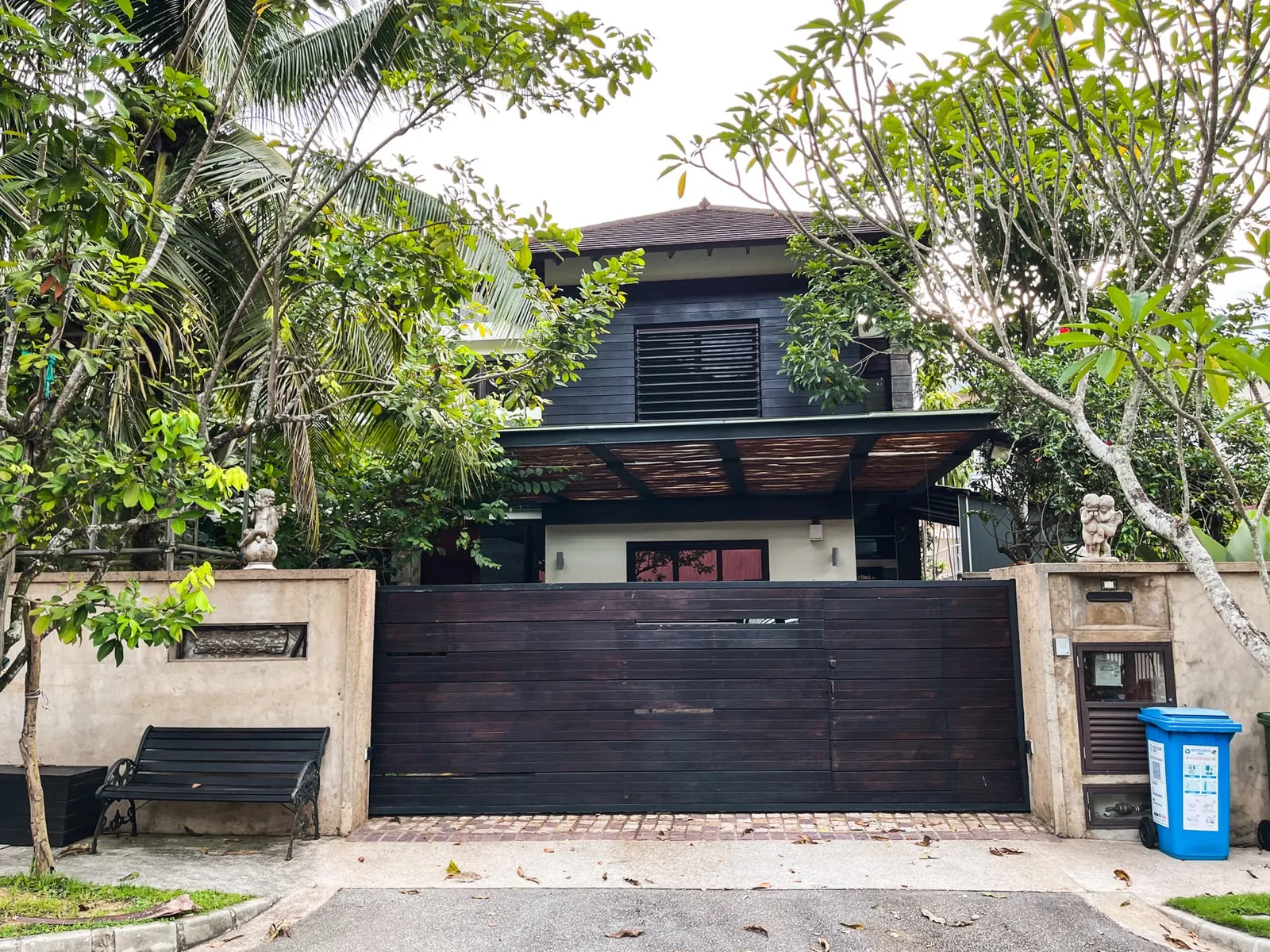
Three conversations this month, all about the same headline. So let me name the pattern properly.
As EdgeProp reported this week, landed homes in Singapore are being marketed from around S$880,000. The specific listing is a semi-detached house in Fuyong Estate, off Upper Bukit Timah Road in Bukit Panjang, asking S$880,000, which works out to S$291 psf on the land. That is not a typo. In a year where 2,147 landed homes changed hands at an average of S$1,931 psf and a median price of S$4.6 million, there are estates trading below S$500 psf, and semi-detached houses have sold for under S$900,000.
The number is real. I have checked. But the number is also the easy part of the story.
Across seventeen years and five market cycles, I have watched these pockets surface in the news every few years, usually with the same framing: hidden gems, last affordable landed, get in before everyone notices. The framing is wrong. These homes are not underpriced. They are precisely priced, for reasons the headline does not have room to carry. This piece is that room.
Why is a landed house selling for S$291 psf?
One reason, and it explains almost everything: the lease.
Fuyong Estate sits on 99-year leases that started in March 1947. They expire around 2046, which leaves roughly twenty years on the clock. Mayfair Park in Bukit Timah, another of these pockets, runs on 99-year leases from 1952, so about twenty-five years remain. Unique Garden, also in Bukit Timah, holds leases from 1960 and 1972, giving thirty-three to forty-five years. At the extreme end, homes in the Chempaka estate, on a 70-year lease from 1964 with less than a decade left, have sold for between S$400,000 and S$538,000 over the past year.
Line the prices up against the leases and the market’s logic becomes visible. Fuyong Estate has averaged S$285 psf over the past twelve months. Mayfair Park, with five more years of lease, averages S$366 psf. Unique Garden, with a decade or two more again, averages S$641 psf. The market is not confused about these estates. It is pricing years of remaining use, with a discipline that headline writers rarely credit.
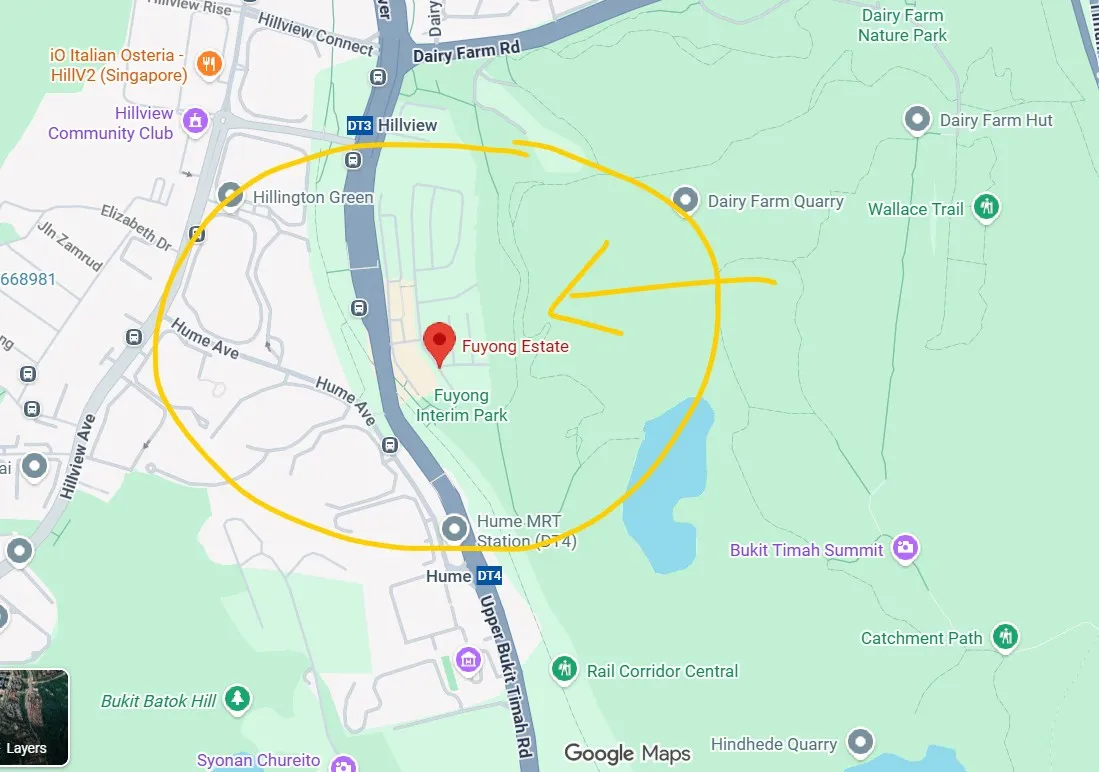
And to be clear, these are not unpleasant places to live. Fuyong Estate sits near The Rail Mall, HillV2 and Dairy Farm Mall, with the Rail Corridor and Dairy Farm Nature Park at its back. Mayfair Park is a seven-minute walk from Bukit Timah Plaza and within a kilometre of Methodist Girls’ School and Pei Hwa Presbyterian Primary. The discount is not for the location. It is for the clock.
| Estate | Avg price (12 mths) | Lease remaining |
|---|---|---|
| Fuyong Estate, Bukit Panjang | S$285 psf | ~20 years |
| Mayfair Park, Bukit Timah | S$366 psf | ~25 years |
| Unique Garden, Bukit Timah | S$641 psf | ~33-45 years |
| Chempaka estate | S$400,000-S$538,000 per home | under 10 years |
Can you even finance a 20-year-lease home?
Here is where the sticker price starts to mislead. CPF rules tie your usage to whether the remaining lease covers the youngest buyer until age 95. Fall short of that and your CPF usage is pro-rated downwards; on very short leases, CPF may not be usable at all. Bank financing is constrained along similar lines.
Run that against a forty-five-year-old buyer looking at Fuyong Estate. Twenty years of lease gets that buyer to sixty-five, nowhere near ninety-five. The CPF that quietly does much of the heavy lifting in most Singapore purchases is largely off the table, and the loan quantum shrinks with it. A S$880,000 home that must be carried substantially in cash is not the same purchase as a S$880,000 home. Families who compare it against a condo at sticker price are comparing two different financial machines.
A short-lease landed home is not a cheap house. It is a fixed number of years of living, priced honestly, that stops being worth anything at the end.
What about the 8% rental yield?
The rental angle deserves particular care, because it is where these stories tend to oversell. The arithmetic looks seductive: buy at S$888,000, rent at S$6,000 a month, and you are holding a gross yield of about 8.1%. Buy the S$808,888 house instead and the same rent pushes it near 8.9%. Tenants, as the EdgeProp piece fairly notes, are generally less affected by remaining lease than buyers are; a usable, convenient house still rents.
But look at what these houses actually rent for, not what the illustration assumes. Actual rentals along Jalan Asas in Fuyong Estate have ranged from S$3,000 to S$7,300 a month, which implies gross yields of roughly 2.2% to 5.8%. Mayfair Park rentals run S$4,500 to S$9,800, implying 2.9% to 6.3%. Respectable, but a long way from the headline number, and all of it gross. Take off property tax, maintenance on a house that is decades old, vacancy, agent fees and the renovation these estates usually need, and the net figure thins considerably.
And the deeper problem is not the yield. It is that every year of rent you collect is a year off a lease that ends at zero. A condo landlord’s asset depreciates slowly and arguably. This one depreciates on a schedule you can read off the title deed.
The future-buyer test, applied without mercy
Whenever a family asks me about a purchase, I ask the same question back: who buys this from you in fifteen years? For most properties the answer takes some thought. Here it takes none, and that is the warning.
Buy in Fuyong Estate today with twenty years left, hold for ten, and you are selling a house with ten years of lease to a buyer who likely cannot touch CPF for it and will struggle for any meaningful loan. Your exit pool is not merely small. It shrinks every single year you hold, by design.
Normally, ageing 99-year properties keep one late-life exit in reserve: the en bloc sale, where a developer buys the whole site and the lease gets topped up. Landed estates do not realistically have it. These homes are individually titled, so a developer would need every single owner to agree, negotiated door by door. It happens roughly never. There is no cavalry.
The exit pool for a short-lease landed home does not just start small. It shrinks every year you own it, by design.
This is why I tell anyone framing these pockets as an investment, or hoping to flip one, that the story is not here. The dynamics that make a flip work, a broadening buyer pool and improving financing, run in exactly the opposite direction. Pretending otherwise wastes everyone’s time.
So who are these homes actually for?
Having said all that, I do not think these estates are traps. They are specific. Across this month’s conversations, two profiles kept surfacing where the answer was not an automatic no.
The first is the family right-sizing out of a larger landed home, and this is the cleanest fit I know. The bigger house has done its work. The kids are out. Selling it releases seven figures of capital, and one of these pockets lets the couple keep a garden, ground-floor living and the texture of a landed estate for, say, S$900,000 of the proceeds. Twenty years of lease against a couple in their sixties is not a mismatch; it is close to an exact fit. Capital releases, lifestyle holds, the math sits. This is the rare case where the clock on the lease and the clock on the family run at the same speed.
The second is the young family stretching toward a S$1.2 million condo who genuinely wants a yard and is honestly flexible on location. It can work, but only if the tenure tail, the condition of a house built in the fifties, and the ten-year plan are walked through without flinching. Not the headline. The home that still fits in seven years, and the exit that still exists in ten. Some families finish that walk-through and proceed with clear eyes. Most, in my experience, discover the comparison they should have been running all along.
Because the real comparison is never landed-versus-condo at sticker price. It is total cost across a decade: lease remaining, renovation, upkeep, financing in cash, and liquidity when you eventually need to move. On that ledger the S$880,000 house and the S$1.2 million condo are much closer than they look, and sometimes they swap places entirely.
The read for families thinking in decades
Most of the families I work with are on their second or third property, thinking about homes that must serve parents on the ground floor and children who have not yet left. For that kind of buyer, the honest summary is short: these pockets are almost never your answer, because a twenty-year lease cannot carry a twenty-year family plan, let alone two generations of one. Conventional landed, the kind I cover in depth in my District 19 landed report, plays by entirely different rules of tenure and exit, and deserves to be assessed by them.
But the S$880,000 headline still earns its place in your thinking, for what it teaches. It is the clearest demonstration in the market right now that price is information. A landed home at S$291 psf is not a bargain hiding in plain sight in a country this scrutinised; it is the market telling you, precisely, what twenty years of use is worth. Learn to read the discount and you will read premiums better too, on the freehold terrace, the new launch, the resale condo, all of it.
The number is real. The question was never the number. The question is whether the years attached to it match the years your family actually needs, and that conversation looks different for every family. It cannot happen in a headline. It can happen across a table.
The numbers
| Fuyong Estate asking price | S$880,000 (S$291 psf) for a semi-detached |
| Fuyong Estate lease | 99 years from 1947, about 20 years left |
| Mayfair Park average | S$366 psf over 12 months (URA data) |
| Mayfair Park lease | 99 years from 1952, about 25 years left |
| 2025 landed market average | S$1,931 psf; median transaction S$4.6 million |
| 2025 landed transactions | 2,147 homes changed hands |
| Cheapest 2025-26 deals | Chempaka estate homes at S$400,000-S$538,000, under a decade of lease left |
Questions families ask
Can you really buy a landed house in Singapore for under S$1 million?
Yes, in a handful of estates like Fuyong Estate in Bukit Panjang and Mayfair Park in Bukit Timah. A Fuyong semi-detached was recently asking S$880,000, and Mayfair Park homes have sold between S$850,000 and S$1 million. But every one of these sits on a 99-year lease with roughly 20 to 25 years remaining, which is the entire reason for the price.
Can I use CPF to buy a short-lease landed home?
It depends on the lease. If the remaining lease does not cover the youngest buyer until age 95, CPF usage is pro-rated downwards, and on very short leases CPF may not be usable at all. Bank financing is constrained in a similar way. Many buyers in these estates end up needing substantially more cash than the sticker price suggests.
Are cheap landed homes a good investment?
In my view, no. The lease runs down every year you hold, your future buyer faces even tighter CPF and loan restrictions than you did, and there is no en bloc mechanism to rescue the exit because landed homes are individually titled. These homes can make sense as a place to live for a defined stretch of years. They rarely make sense as a store of value.
What happens to a landed home when its 99-year lease runs out?
The land reverts to the state and the home's value goes to zero. That is why estates like Chempaka, with under a decade of lease left, have seen homes trade at S$400,000 to S$538,000. You are not buying an asset that ends at zero by accident; you are buying a fixed number of years of use, and the price should be read that way.
Who should actually consider a sub-S$1 million landed home?
The clearest fit is a family right-sizing out of a larger landed home: they release capital, keep a garden and ground-floor living, and their timeline can genuinely match the lease. A young family stretching toward a S$1.2 million condo can occasionally make it work too, but only after walking through the tenure, condition and ten-year plan honestly.
Reporting referenced: EdgeProp. Analysis and views are Adrian Lim's own.
Talking it through beats reading about it.
If this story touches a decision your family is weighing, send Adrian a message. A first conversation costs nothing and commits you to nothing.
WhatsApp Adrian · +65 8183 2333More from Insights
The S$85 Million Cluny Hill Sale, and What It Doesn't Mean for You
An S$85 million bungalow sale finally surfaces a year after the deal was done. The quietness is the story.
A Forged NRIC Nearly Cost a Katong Family S$2.9 Million. Here's the Real Lesson
The headline reads as a banking failure. For families sitting on a fully paid landed home, it reads as something closer to home — a question about who is watching your title.
Singapore's New Defect Rules: What They Change for New-Launch Buyers
The headline is the enforcement. The quieter shift is what a developer's track record now means when your family is choosing.