What OpenAI's S$300 Million Actually Means for Your Home
A capability story and a price story move at very different speeds — and confusing the two is how families overpay for headlines.
The short read
OpenAI has signed its first MOU with the Singapore government, committing more than S$300 million (US$234 million) to build an Applied AI Lab — its first outside the United States — and grow local technical teams to over 200 roles. For most Singaporean families, this changes nothing about the home they should buy. For owners near one-north, Tanjong Pagar and the CBD fringe, it is quiet reinforcement of an existing rental-demand thesis that plays out over years, not quarters.

A few families have asked me this week what to make of OpenAI’s commitment to Singapore. The honest answer is the one that takes the longest to say — so this is the long version.
The news itself, first. As CNA reported on 20 May, OpenAI will commit more than S$300 million (US$234 million) to develop Singapore’s AI ecosystem, under the first memorandum of understanding signed between the Singapore government and the company. The joint initiative, named “OpenAI for Singapore”, was signed with the Ministry of Digital Development and Information, with Minister Josephine Teo present.
The centrepiece is the OpenAI Singapore Applied AI Lab — the company’s first such lab outside the United States. OpenAI says it will grow its Singapore-based technical teams to more than 200 roles over the next few years, expand its office footprint here, and make Singapore one of its global hubs for what it calls forward-deployed engineers — the people who sit between frontier research and real-world deployment. Around the lab sits a stack of talent programmes: an OpenAI Academy chapter, hackathons for teachers, a retraining pathway for mid-career software engineers, and localised SkillsFuture content.
That is what happened. Now for the question everyone actually asked me: what does it mean for your home?
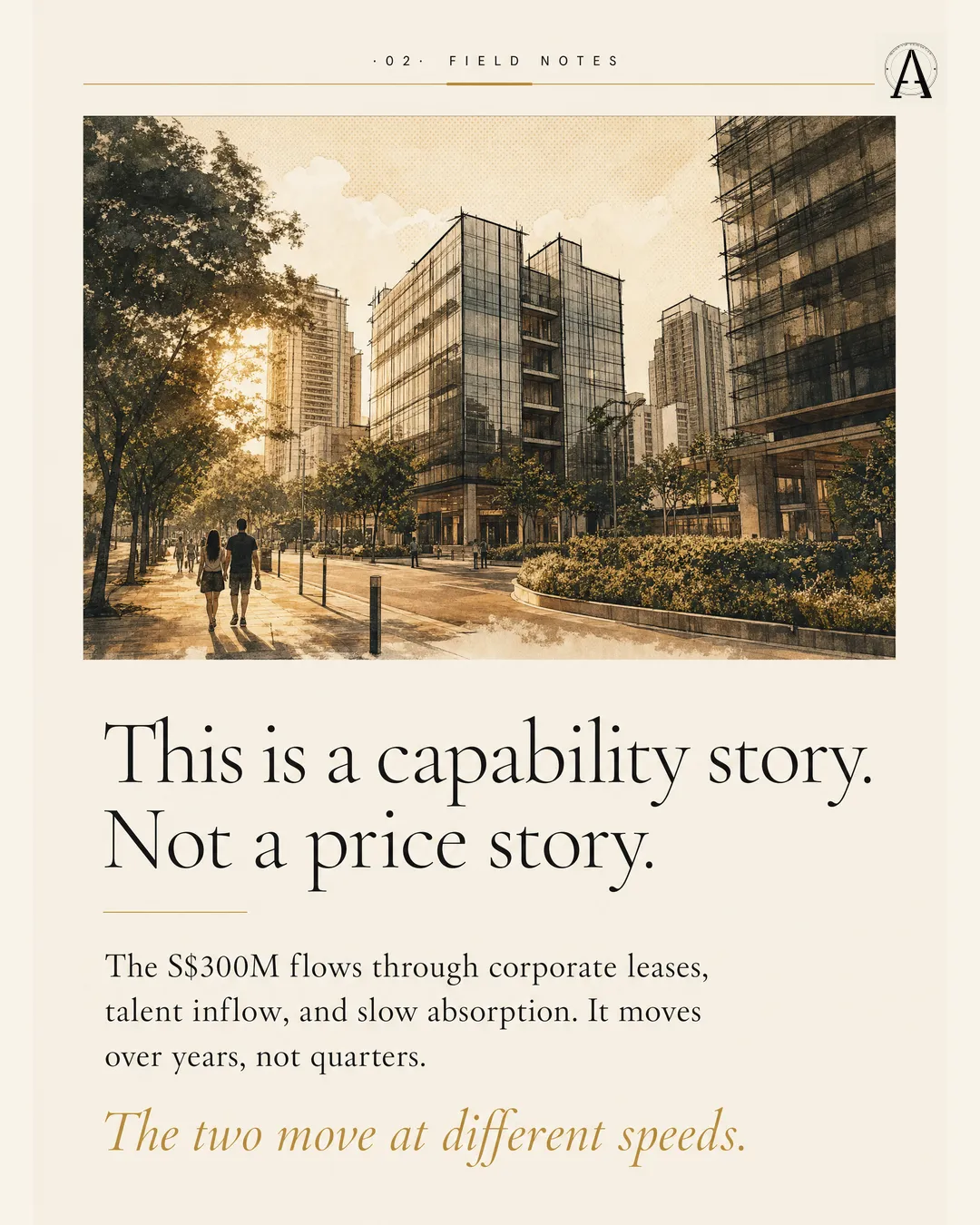
Why this is a capability story, not a price story
Here is the distinction I keep coming back to, because it does most of the work in this analysis. Singapore just got more capable. It did not just get more expensive.
A capability story is about what a country can do — the institutions, the talent, the credibility that make global companies choose it. A price story is about what a specific property in a specific district is worth next quarter. Headlines love to collapse the two into one sentence. The market does not.
A capability story and a price story move at very different speeds, and the expensive mistake is paying the second price for the first story.
Consider what S$300 million actually buys here. It is not a residential development. It is not land. It is a lab, training programmes, and a hiring plan measured in the low hundreds of roles spread over several years. The property-market transmission runs through a long chain: offices expand, engineers relocate, corporate leases get signed, tenancy sustains, and only then — slowly — does any of it read through to prices in the districts where those tenants live.
Every link in that chain takes time. Which is why my honest read is the same one I gave families over WhatsApp this week: for most of you, this news changes very little.
Who does this announcement actually affect?
It helps to be specific about who is in the blast radius, because it is smaller than the headline suggests.
| Who you are | What this changes | Timeline |
|---|---|---|
| Family buying in Punggol, Sengkang, Hougang for the next decade | Almost nothing | Not applicable |
| Owner or buyer near one-north, Tanjong Pagar, CBD fringe | Quiet reinforcement of an existing rental thesis | Years, not quarters |
| Investor chasing “the AI play” off this headline | A reason to slow down, not speed up | See above |
The first group is most of my practice — multi-generational families deciding on a home, not a trade. If you are settling on a place in Punggol or Sengkang for the next ten years, the seven-year question is the same today as it was last Tuesday: if you needed to sell in seven years, would you get out whole? OpenAI’s lab does not move that answer. I say this as someone who spends a good part of his week in exactly these estates — my District 19 landed report exists because the questions there are about family timelines, not tech headlines.
The second group is smaller: families already holding, or seriously weighing, a unit near one-north, Tanjong Pagar, or the CBD fringe. For you, this announcement is quiet reinforcement of a thesis you probably already believed. Corporate leases. Talent inflow. Slow absorption. Two hundred well-paid technical hires arriving over a few years is genuine rental demand — but it is absorption, not a surge. It firms up the floor under your rental market. It does not put a rocket under your resale price.
The third group is the one I would gently talk out of the room. If this headline is the reason you suddenly want to buy near one-north, you are buying the press release, not the property.
Does tech investment ever move Singapore property prices?
Yes — but almost never on the schedule the headlines imply, and almost never because of one announcement.
What actually moves prices in employment-node districts is the accumulation: years of companies choosing Singapore, leases renewing, talent staying, schools and amenities thickening around the jobs. Singapore has been quietly compounding that credibility since long before this MOU — the CNA piece itself notes we are one of the top three markets globally for per-capita ChatGPT adoption and top five for Codex usage. The demand was already here. OpenAI is responding to Singapore’s position at least as much as it is creating it.
That is the correct frame for this news: one brick in a wall that was already being built. Family wealth leans on the wall. It does not lean on the brick.
Singapore was compounding its credibility long before this announcement, and it will keep compounding long after the headlines fade.
There is also a version of this story that matters more for your household income than your house. The retraining programmes — the forward-deployed engineer pathway for mid-career software engineers, the SkillsFuture content — are aimed squarely at people in their 40s and 50s whose careers need to cross the AI line. For a lot of the families I serve, the more consequential question this year is not “should we buy near one-north” but “is one of us retraining”. That is the part of the S$300 million most likely to touch your actual balance sheet this decade.
The question worth holding onto
So here is where I land, and it is the same place my caption landed the day the news broke, just with the working shown.
The question is not “is one-north a buy”. The question is “does this change the home our family needs for the next ten years”. For most families — parents upstairs, kids doing PSLE or NS, a decade horizon and a seven-year exit test — the answer is no. And no is a perfectly good answer. It means your plan was never resting on a headline in the first place.
If you are in the smaller group holding near the employment nodes, the answer is: your thesis just got one brick stronger. Hold the timeline you already had. Do not let a capability story talk you into a price-story decision.
And if you are somewhere in between — not sure which group you are in, or whether your current home passes the seven-year test at all — that is a conversation worth having properly, with your family’s actual timeline on the table. That is the work I do. The headlines will keep coming. The wall gets built either way.
The numbers
| Commitment | More than S$300 million (US$234 million) |
| Announced | 20 May 2026 |
| Vehicle | First MOU between the Singapore government (MDDI) and OpenAI |
| Initiative | "OpenAI for Singapore" joint programme |
| Centrepiece | OpenAI Singapore Applied AI Lab — first outside the US |
| Hiring | 200+ Singapore-based technical roles over the next few years |
| Adoption | Singapore is top-three globally for per-capita ChatGPT use |
Questions families ask
Will OpenAI's S$300 million investment push up Singapore property prices?
Not directly, and not quickly. The commitment funds an AI lab, training programmes and around 200 technical hires over several years. That is meaningful for rental demand near employment nodes like one-north and the CBD fringe, but 200 well-paid tenants arriving over a few years is absorption, not a price shock. Anyone selling you urgency off this headline is selling you the headline, not the market.
Which districts benefit most from tech investment like OpenAI's?
The honest beneficiaries are rental markets near where the jobs land — one-north, Tanjong Pagar and the CBD fringe, where corporate leases and relocating talent concentrate. If your family home is in Punggol, Sengkang or Hougang, this announcement changes almost nothing about your decision. The seven-year question for your home is the same as it was last week.
Should I buy near one-north because of the AI boom?
Only if the home already made sense for your family without the headline. If you were already weighing a unit near one-north for a decade-long hold, this is one more brick of confirmation, not a new reason. Buying a location because of a press release is how you pay tomorrow's price for a story that needed years to arrive.
How long does it take for corporate investment to show up in housing demand?
Years, not quarters. An MOU is signed, then offices expand, then hiring ramps, then employees settle and sign leases — and only after sustained tenancy does any of it read through to prices. Across seventeen years I've watched this sequence repeatedly, and the common thread is that the story arrives early and the liveability arrives late.
Reporting referenced: CNA. Analysis and views are Adrian Lim's own.
Talking it through beats reading about it.
If this story touches a decision your family is weighing, send Adrian a message. A first conversation costs nothing and commits you to nothing.
WhatsApp Adrian · +65 8183 2333More from Insights
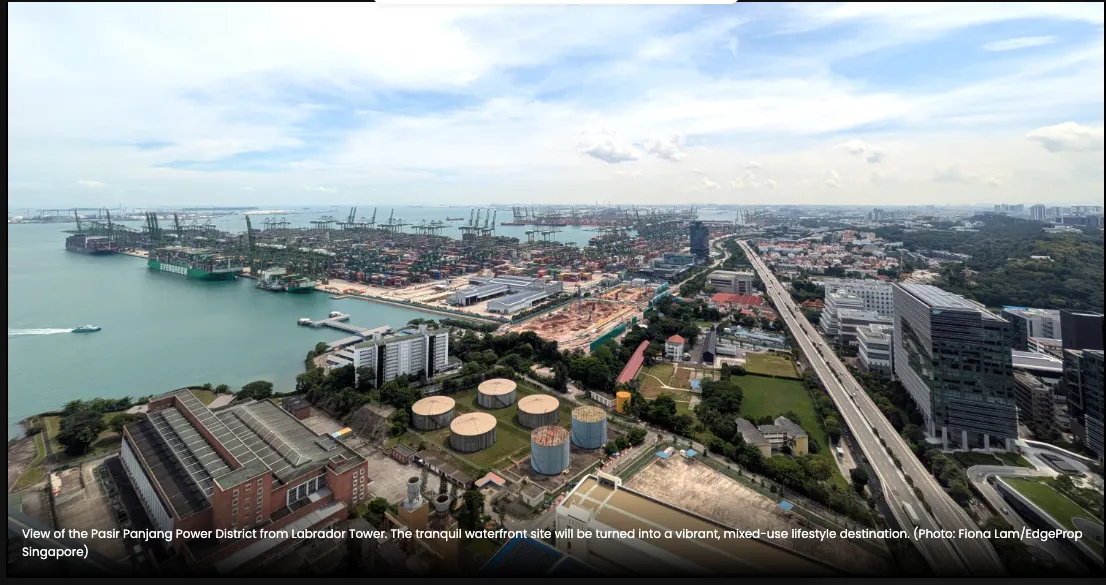
The Greater Southern Waterfront: Reading a 30km Story on Family Time
A 30-kilometre transformation is not one decision. It is several, on different clocks — and the clock that matters most is your family's.
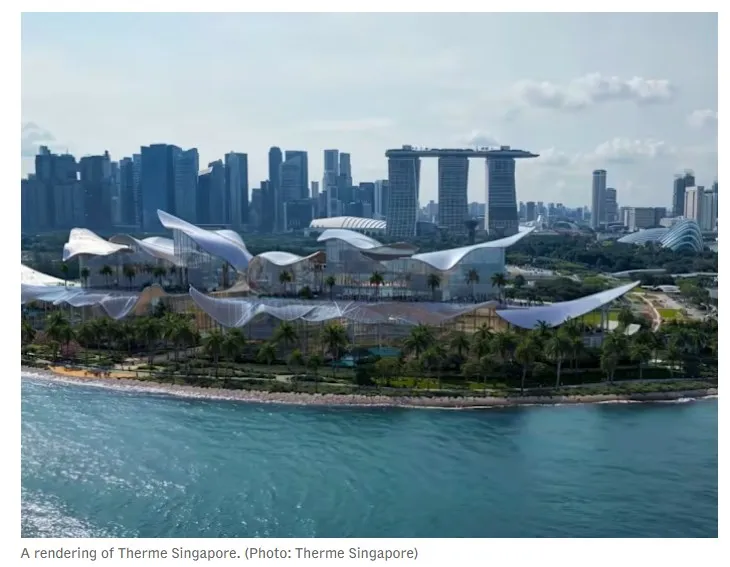
Therme at Marina South: What a 2030 Wellness Hub Does to Home Values
A 720,000 sq ft wellness destination is a real catalyst for Marina South. It is also five years away, and that gap is where families get the decision wrong.
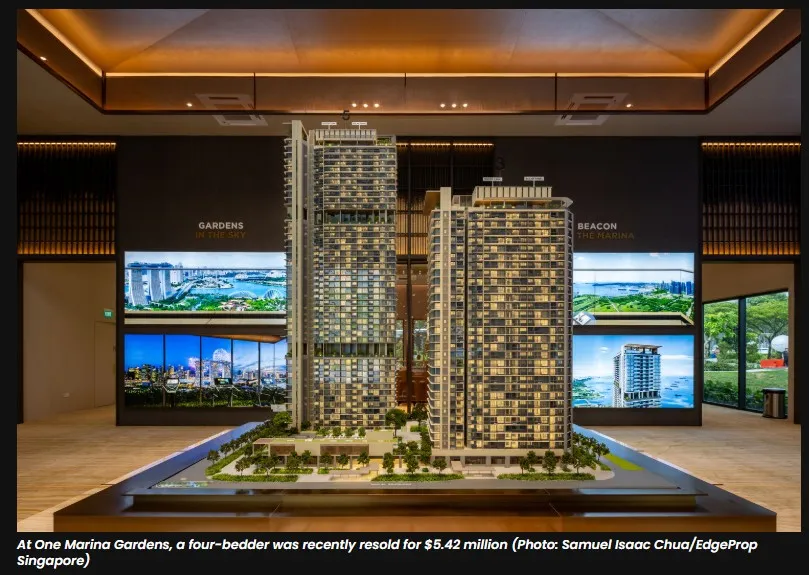
One Marina Gardens at $3,290 psf: What a Record High Really Signals
A new print at the top of District 1 is real news. It is also, for most Singapore families, scenery — and knowing the difference is worth more than the headline.